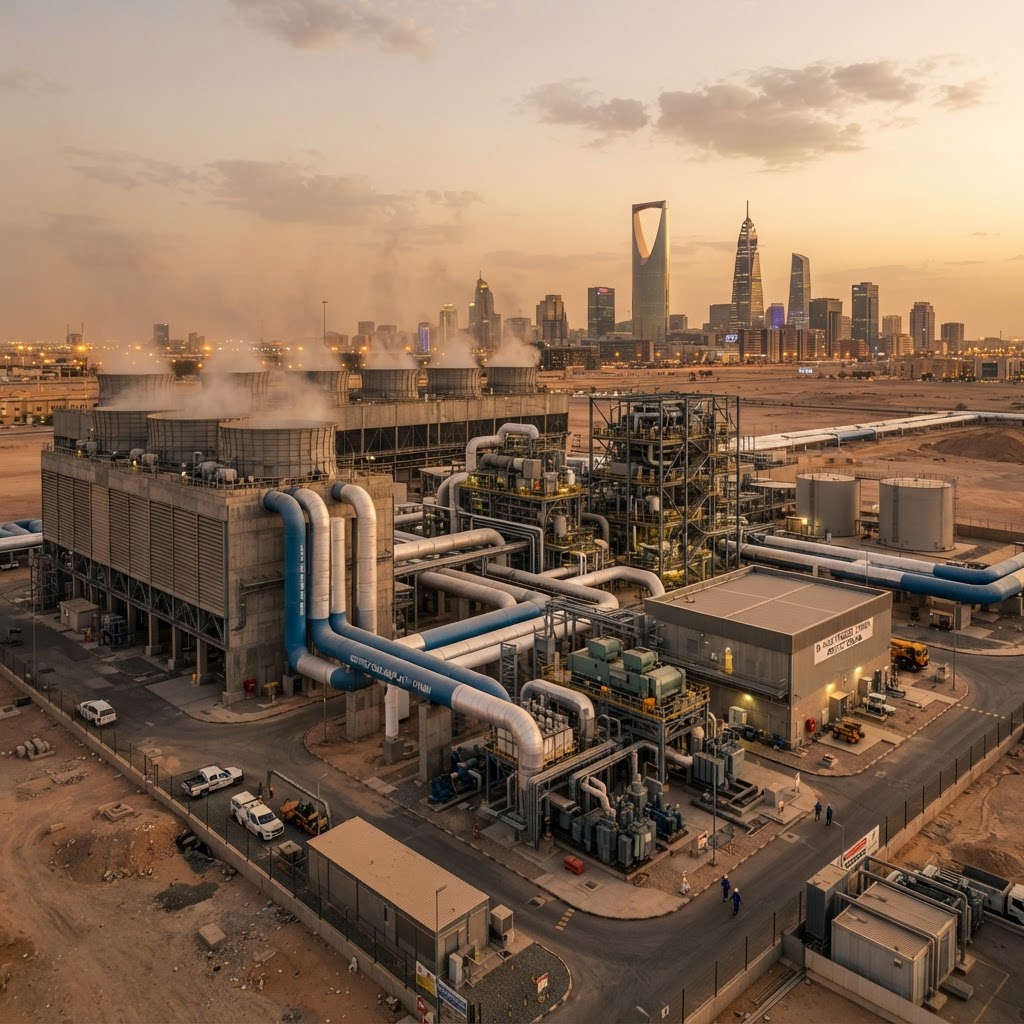
Cooling a Desert Capital
Riyadh sits in one of the world's hottest, driest climates, and its rapid vertical growth has been made possible by large-scale district cooling and thermal storage. Central chilled-water plants, often paired with thermal energy storage, supply districts like King Abdullah Financial District and King Khalid International Airport.
Passive Cooling Too
Traditional Najdi architecture in the region used courtyard houses, mashrabiya screens, and wind towers to cool with little energy. Modern Riyadh blends that heritage with industrial-scale cooling to keep its towers habitable in summer peaks above 50°C.
The Desert-City Blueprint
As Saudi Arabia builds NEOM, The Line, and Trojena, the cooling lessons from Riyadh — efficient centralized cooling plus passive design — are the invisible foundation that any desert megacity must solve first.
// Community
Share Your Thoughts
Join the discussion. Post a detailed take, or reply to others debating this place.
No comments yet
Be the first to start the discussion about this place.